

In the 2025 World Happiness Report, Israel was ranked the 8th happiest country in the world, ahead of Switzerland. And I want to tell you why that makes perfect sense.
When I share this with friends around the world, I usually get the same reaction: “Are you serious? Israel is at war!” Yes. We are. And yet, here we are, near the top of the happiness rankings.
So what’s going on?
What the Report Actually Measures
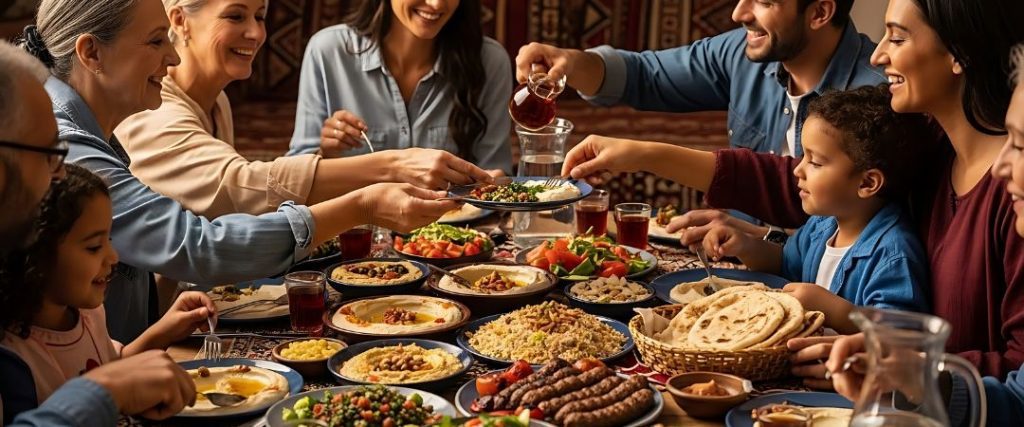
The World Happiness Report, which measures the happiness index in over 140 countries, takes into account a variety of aspects such as GDP per capita, life expectancy, social connections, civil liberties, and levels of corruption. The 2025 edition placed special emphasis on generosity, caring for others, and community connection. One of the most striking findings was that people who ate alone were significantly less happy than those who shared meals with others.
The Israeli Secret: Family and Community
Israel is, by almost every sociological measure, an intensely relational society. Family bonds here are remarkably tight, not just among traditional or religious communities but across secular and highly educated populations as well. Israel is the only developed country where the average number of children per family has increased over the last decade. Walk through any Israeli neighborhood on a Friday afternoon and you can see grandmothers with grandchildren, extended families gathering, and tables being set for Shabbat dinner.
This is not nostalgia but the living, breathing rhythm of everyday life here.
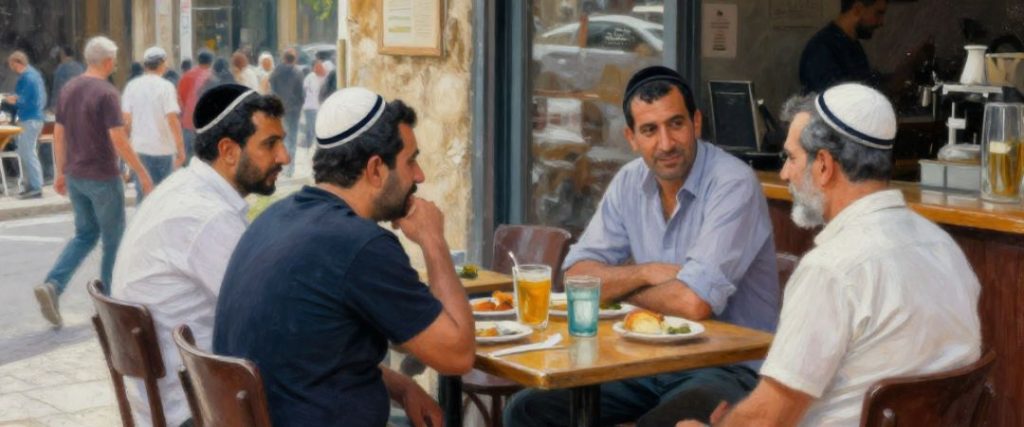
Then there are the social networks. Friendships forged in high school, youth movements, and especially in the military create bonds that last entire lifetimes. Sitting in a Tel Aviv café, you can find tables of retirees, who have been friends since their army days of forty years ago, still arguing, laughing, and showing up for each other. That kind of social density is rare in the modern world.
War Does Not Always Tear Communities Apart – Sometimes It Welds Them Together
This may seem counterintuitive, but social scientists have known it for a long time. Émile Durkheim, one of the founders of the field of sociology, observed that people with strong social bonds are far less vulnerable to despair than those who are isolated.
External threats tends to strengthen internal cohesion. Americans call it “rallying around the flag.” Israelis do not need such a metaphor. We live it. When danger arrives, people move towards each other, not away. Even those who fiercely disagree politically with each other find deep solidarity together within their own communities. The divisions are real and loud, but beneath them runs a current of shared identity and mutual responsibility that outsiders often miss entirely.
But There Is One More Factor – And It May Be The Most Important
Researchers measuring happiness rarely account for it. But those of us who believe in the God of Abraham, Isaac, and Jacob know it well:

We have a vision.
The Prophet Isaiah wrote of it thousands of years ago:
“In the last days the mountain of the Lord’s temple will be established as the highest of the mountains… Many peoples will come and say, ‘Come, let us go up to the mountain of the Lord’… He will judge between the nations and will settle disputes for many peoples. They will beat their swords into plowshares and their spears into pruning hooks. Nation will not take up sword against nation, nor will they train for war anymore.” (Isaiah 2:2–4)
This is not wishful thinking. For the Jewish people, this is the direction of history itself. We are not wandering. We are moving towards something. The darkness we are living through right now is not the end of the story. Evil is being exposed, and good is being revealed. Even here and now, we can feel it.
If you read Isaiah, you know this vision very well, have prayed for it, and believed in it alongside with us. That is precisely why Israel’s resilience should come as no surprise to you and why the joy of the people in Israel points to something far deeper than psychology or sociology.
Together, we are feeding families in Samaria
One of the traditions of Passover is to invite all to come and eat. Together, we are feeding families in Samaria this Passover! More and more families are financially struggling in Israel. Your support enables a family to celebrate Passover with joy and dignity.
We are a people with a promise. And that, more than any GDP figure or happiness index, is why we are still smiling!
Shmuel Junger
March 31, 2026