
Reflections from my recent speaking tour in Australia
During my recent visit to Australia, I experienced a moment that left me almost speechless. Not because of hostility, criticism, or a difficult political argument, but because of a simple question from someone who genuinely supports Israel.
I was speaking to a group of Christians, sharing the reality of life in Israel and particularly in Judea and Samaria, when a gentleman in the audience raised his hand.
“How come the Palestinians living in Judea and Samaria are under siege and cannot leave their own towns?”
I looked at him, confused.
“I’m sorry, can you repeat the question?”
He repeated it, explaining that he understood that Palestinians living in certain towns and villages in Judea and Samaria were essentially locked inside, unable to leave their communities.
I was stunned.
This was not a question about checkpoints, security restrictions, or the complicated realities of movement in Judea and Samaria. Those are real issues, and we can certainly discuss them. He genuinely believed that Palestinian towns were under permanent siege, that their residents were simply trapped inside, unable to come and go. However, that is not an accurate description of everyday life in Judea and Samaria.
I tried to understand where this idea had come from. I asked him a few questions, and gradually it became clear that something he had read, perhaps an article or a news report, had left him with this completely distorted picture of reality.
And then it hit me.
Here was a man who supports Israel. A member of a church that had welcomed me before. Someone who had attended my previous visit to Australia, listened to other speakers, and genuinely cared about the Jewish people and the state of Israel. And yet, despite all of that, he had absorbed a narrative so far removed from the reality I know.
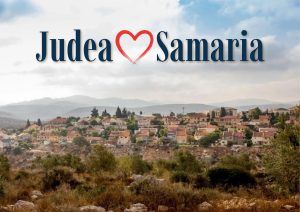 If this is what someone who loves Israel believes, can we only imagine what someone who does not support Israel believe?
That question stayed with me long after the event.
We spend so much time discussing Israel’s challenges. We talk about Iran, Hamas, Hezbollah, the Palestinian Authority, our security, our borders, and our future. We debate what the next Israeli government should prioritize and how Israel should respond to the threats surrounding us. But I am increasingly convinced that one of the greatest challenges facing Israel’s next government will not be confined to the Middle East. It will be the global battle over Israel’s legitimacy, its reputation, and the world’s understanding of what is actually happening here. And this is a battle we are not winning.
When people thousands of miles away from their understanding of Israel through headlines, selective reporting, misleading descriptions, and sometimes outright falsehoods, we face an enormous challenge. A single distorted impression can become an accepted fact. That supposed fact becomes an opinion. And eventually, that opinion shapes public attitudes, political decisions, boycotts, and international pressure.
How do we explain our reality when so many people have already been convinced of a different one?
How do we tell the story of Judea and Samaria when the very basic facts of everyday life are so widely misunderstood? And how do we reach people who will never attend an Israel event, never listen to an Israeli speaker, and never think to question what they see in the news?
I do not pretend that Israel is perfect, or that every criticism of Israel is dishonest. We have real challenges, difficult questions, and complicated realities that deserve serious discussion. But there is an enormous difference between discussing reality critically and replacing reality with a false picture.
That evening in Australia reminded me why our work matters so much. I looked at the gentleman who had asked the question, then at the rest of the audience, and said: “I have just realized how much more work we have to do.”
And I meant every word.
We cannot assume that because someone supports Israel, they understand Israel. We cannot assume that because someone has visited Israel, they fully understand Judea and Samaria. And we certainly cannot assume that the truth will somehow find its way into the world without people willing to tell it.
We need to continue traveling. Continue speaking. Continue inviting people to see the reality with their own eyes. Continue inviting and bringing visitors into the communities of Judea and Samaria, introducing them to the families, the schools, the farms, and the people who call this land home. We need to educate, to challenge misconceptions, and most importantly, to listen carefully enough to discover what people actually believe because sometimes the most revealing moment is not when someone challenges your position. It is when someone asks a question and you suddenly realize that you are not even starting from the same set of facts.
I returned from Australia deeply grateful for the hundreds of people I met, for their friendship, their conviction, and their extraordinary love for Israel. But I also returned with a renewed sense of urgency. The battle for truth is far from over. In many ways, we are only beginning to understand its scale. And if we want the world to understand Israel, we cannot afford to stop telling our story.
We have so much more work to do.
Shmuel Junger
Executive Director | CFOIC Heartland