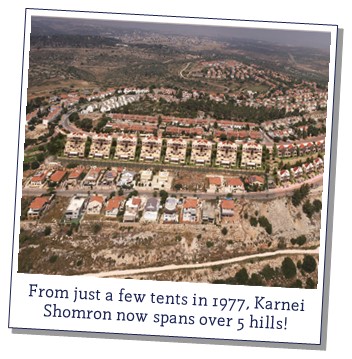
An Eye on Zion: Karnei Shomron
During the Feast of Tabernacles in 1977, an idealistic couple heading to visit the pioneering community of Kedumim suddenly found themselves taking on a new mission.

During the Feast of Tabernacles in 1977, an idealistic couple heading to visit the pioneering community of Kedumim suddenly found themselves taking on a new mission.
Liebe Freunde,Wir in Israel durchleben derzeit eine „Wartezeit“,...
Beste Vriend, Op dit moment gaan we in Israël door...
Shmuel has returned home to Israel after his long summer travels and has a teaching to share for this week’s portion, Shoftim. This week’s portion is a serious one that is full of relevant commands, namely: the rules of war.
Portion Re’eh details the covenant between the Children of Israel and God. It admonishes the Children of Israel to guard themselves against pagan practices as they enter the land of Israel. Several times it mentions the place that God chose. What is this place? Jerusalem of course!
We are actually living a life that requires us to balance two different tasks at the same time. One is just living an ordinary life. The other is dealing with a terrible war, with threats that we never thought we would have to face, with growing criticism of our country from even our strongest allies.

This week marks eleven months on the Hebrew calendar since the October 7, 2023, attack on Israel. Eleven months is the traditional Jewish mourning period. This week’s Torah portion Ekev speaks of future disasters and destructions, many of which feel all too familiar today.
Around 1700 years ago, a group of devout Jews settled the southern edges of Judea in the Hebron Hills. Their hearts were directed towards Jerusalem, the eternal site of the Shechinah (The Divine Presence) where the Temple once stood in all its Divine glory.
In the English translation of this portion, it almost seems as though Moses blames the Children of Israel for his exclusion from the Land. However, when read in Hebrew, it could be understood that Moses was excluded from the Land for the sake of the Children of Israel. How can that be?
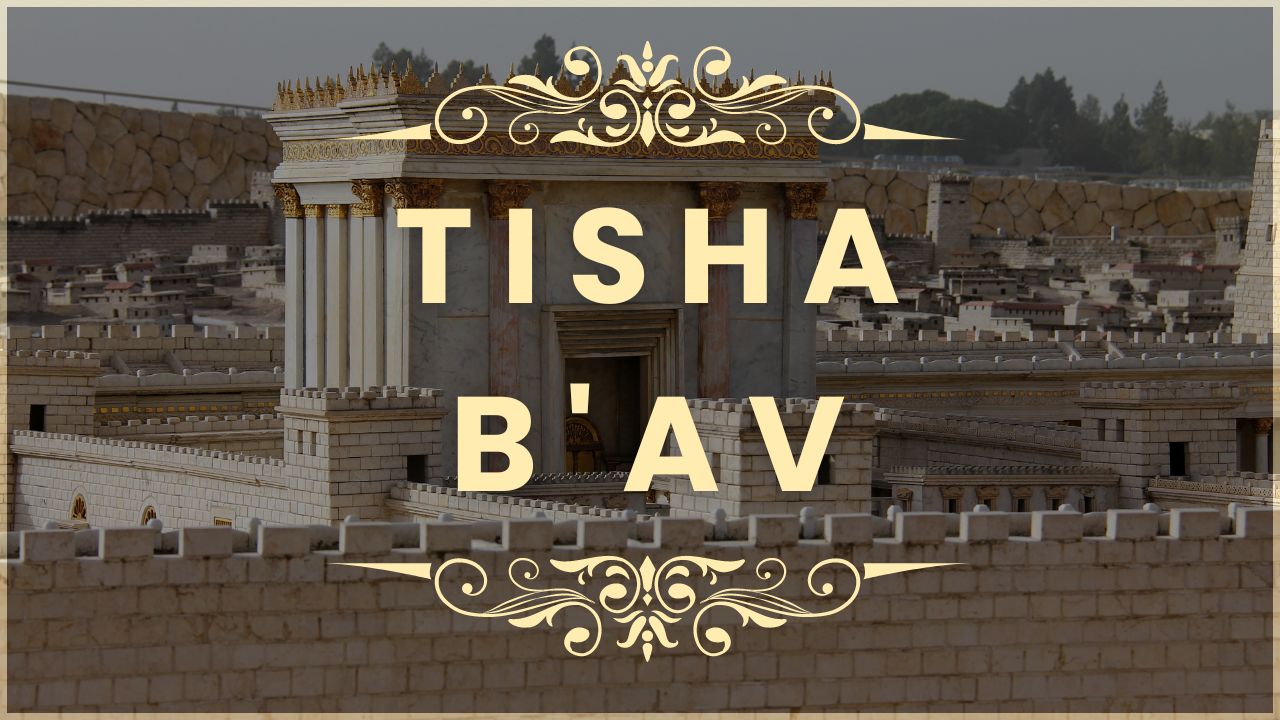
Tisha B’av is the saddest day on the Jewish calendar, commemorating the destruction of both Temples and the suffering of the Jewish people. Delving into a conversation between the philosopher Plate and the prophet Jeremiah, Shmuel explores the question of what the Temple means and why people continue to mourn its loss.