
Join Sarah as she takes you into the stores of Israel while she shops for school supplies and gets ready to decorate her Sukkah! Are you ready to celebrate Sukkot? How will you be decorating your Sukkah this year? Is your heart ready to welcome the spirit of Sukkot into your home? We also wanted to share this article written by Avital Buchnick about her thoughts regarding Sukkot. If you want to help a family celebrate this year, there is still time to donate! Meal vouchers are being distributed to families in need all across Samaria and you ARE making a difference in how they are able to celebrate. Thank you!
When a Fragile Shelter Brings a Powerful Message
by Avital Buchnick
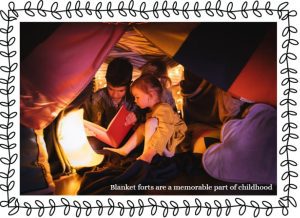 When I was a little girl I loved building forts from our living room furniture. I would strip the sofas of their cushions and pile the cushions one on top of the other to create the walls of my floppy structure. I would then rummage through the neatly piled sheets in our linen closet until I found the perfect one to act as my roof. I could spend hours playing make-believe in my little home.
There is something very innate about wanting to create a space or shelter for ourselves. This is why I’ve always liked the holiday of Sukkot. During this week-long festival we get to live in temporary huts topped with branches and often beautifully decorated with artwork, flowers, and foliage. We sit in these huts for one full week to recall the time we camped in the wilderness and to remind us of how during that time God provided for us. The Sukkah represents our vulnerability and during Sukkot we are symbolically showing God that we trust in him to protect and provide for us as he did long ago in the desert.
During this festive week, we try to spend as much time as possible in the Sukkah. We eat all of our meals in it and some of us even sleep in it. A few years ago, my husband, little kiddies and I decided that we would all sleep in the Sukkah together. We brought our mattresses and blankets out (God is not looking for us to be uncomfortable after all) and set up our beds one next to the other. It was actually quite cozy and a great family bonding experience. The vulnerability of sleeping outside with our kids reminded me of something I heard three years ago while on the CFOIC Heartland Judea Feast Tour.
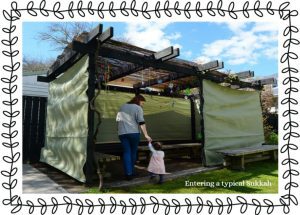 During our visit to the community of Efrat we split up into smaller groups for lunch and ate in Sukkahs around the community. Our host was a Rabbi and psychologist. He shared a beautiful idea on the significance of the Sukkah experience. On Sukkot, he said, we make ourselves vulnerable to the elements as the ancient Israelites were in the desert. The elements, he added, include the people that surround us. Do we feel safe among our neighbors? Living outdoors on your sidewalk or in your back yard for a week? There is no locks on our Sukkahs. We expose ourselves in a sense to whatever is “lurking”.
He went on to explain that living in our Sukkahs is a kind of litmus test for our communities. Have we created communities where we feel safe? If we feel comfortable eating, sleeping, living in our Sukkahs then I guess we have. This could not be more true than in the communities of Judea and Samaria in the Biblical heartland, communities that have been built upon the foundation of biblical values.
There is a beautiful verse that we say during our evening prayers asking God to “spread His shelter [Sukkah] of peace upon us”. The Sukkah structure is not meant to be permanent; it is fragile and temporary. What makes it a “shelter of peace” is the knowledge that we can live our lives outdoors in a hut, for a week, exposed to the elements, all because we are following God’s command. And we know and trust that He will protect us.