
Facebook
Twitter
LinkedIn
Email
Print
February 7, 2023
Sondra Oster Baras
There is an enormous amount of unrest in our country these days, coming both from within the country and from without. Just over a week ago, on Friday night, seven people were murdered outside a synagogue in Jerusalem, by an Arab terrorist resident of Jerusalem. The following morning, a 13-year-old Arab terrorist, also resident of Jerusalem, attacked a father and son as they walked home from synagogue in the City of David. The son was an IDF officer on leave and luckily was armed. Even though he had been shot in the chest, he managed to chase the terrorist and neutralize him before collapsing. Both of these incidents point to a very serious problem in Israel, that has been of huge concern to our security forces ever since May 2021, when Arab violence erupted in mixed cities all over Israel and Arab neighbor turned against Jewish neighbor with terrible results. But the country is united in support of whatever measures can successfully combat this threat.
The youngest victim of the Friday night shooting was a 14-year-old boy. As his family mourned their terrible loss, and as both friends and strangers poured into the family home to comfort them in their loss, it became clear that this family lived in terrible poverty. Overnight, a fundraising campaign was launched and money was raised to help the family. It is outpourings of love and support like these that characterize Israel in its finest moments. In so many ways, we are indeed one large family.
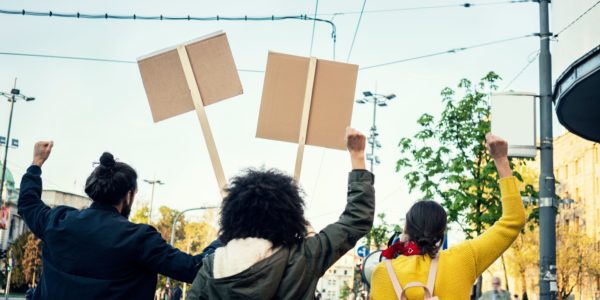
Unfortunately, though, when it comes to politics, the language changes, the respect and care for one another seems to disappear, and what should be quiet, respectful discourse becomes ugly. And that is what we are witnessing now in the ongoing rallies and campaigns against the current government, focusing in particular on the proposal for judicial reform.
The new Minister of Justice, Yariv Levine, has put forward a program, based on proposals he first drafted some 20 years ago. Another active proponent of the plan is the Chairman of the Knesset Judiciary Committee, Simcha Rotman, who wrote several books on the subject in the past few years. Both are legal experts.
A bit of background. More than 20 years ago, then President of the Supreme Court, Aharon Barak, delivered a number of critical decisions that, in effect, changed the balance of power between the Knesset and the Judiciary. Israel does not have a constitution, as the various political factions were never able to agree on what that constitution should include. One of the most basic points of conflict is the competing values of civil liberties and religious and national values. There is no doubt that both of these values are critical but there is an ongoing debate in the country as to how to balance these values.
From its inception, the Knesset passed a number of Basic Laws that set forth the jurisdiction of the Government, the Knesset and the Judiciary. But these laws were passed only by the Knesset and by an ordinary majority. No law specifically established these laws as superior in value to any other Knesset Law. Until Aharon Barak. He determined that these laws would serve as constitutional laws and could therefore be used to invalidate laws that had been lawfully passed by the Knesset. In addition, a new Basic Law ensuring civil liberties, passed by a slim majority in a vote in which a minority of the Knesset participated, was deemed a basis for invalidating Knesset laws. Both of these judicial reforms took place without the consent of the electorate or of their elected representatives. They did not even enjoy the support of all Supreme Court justices.
Ever since, these changes have been used to either invalidate or threaten to invalidate Knesset laws. When the Knesset passed another Basic Law to redress the balance, to ensure that Jewish, national and religious values would be weighed with the civil liberties issues, that law was invalidated by the Supreme Court.
This situation has created simmering anger for years as the religious and traditional public in Israel, who are a majority of the country, have felt their values trampled. Today, when a conservative government is trying to redress the imbalance created years ago, it is accused of threatening democracy and freedom in Israel. The people who are yelling and screaming today, however, said nothing when an activist Supreme Court effected its own judiciary revolution, in a totally undemocratic way.
Tempers are flaring and the stakes are high. But still, there is no excuse for the extreme language, accusations, and bullying that we are witnessing on both sides of the political aisle. This reform is not the end of democracy, and at the same time, some of the opponents raise important points that must be considered. There is, indeed, overwhelming consensus in Israel and in the Knesset on the need for judicial reform. Reasoned debate would go a long way towards passing legislation that would both redress the serious issues we are facing while at the same time enjoy broad political support. But in the political atmosphere so prevalent in Israel today, and unfortunately in many countries around the world, quiet debate has been tossed out the window.
We are a strong country and a strong nation. While the nasty rhetoric that we see each night on the news is depressing, we know that the people of Israel are better than the politicians. These are the people who immediately donate to help a poor family whose young son was murdered by terrorists. These are the people who show up at a stranger’s home and offer to help, just because they learned of their tragedy, of their suffering. And in conversations on these very political issues between neighbors, respectful debate is taking place and points of agreement are broad.
There are always disagreements and when critical values clash, as they do in every society, there will always be people who draw the lines in different places. I just wish our leaders would remember that. And I wish the opposition would keep in mind that while they can legitimately oppose any government policy, they should never cross the line to do anything that will hurt the country. Please join me in the hope and prayer that reasonableness will prevail.